
Huawei accelerates large-scale commercial deployment of AN Level 4
- Details
- Category: Vendors
- 82 views
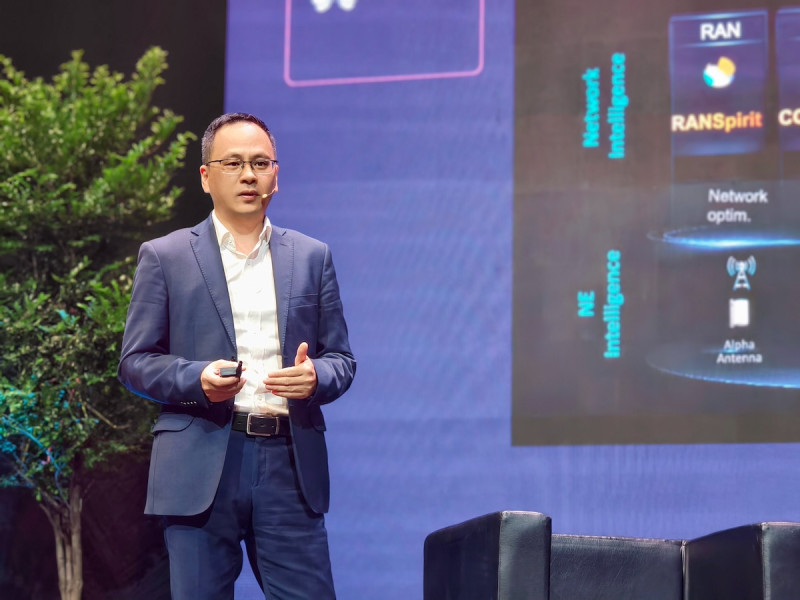
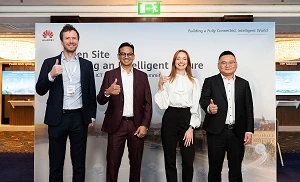
During Innovate Asia 2026, Yongming Lin (pictured), CTO of Huawei's General Development Department, shared Huawei's latest Autonomous Driving Network (ADN) Level 4 commercial use cases at the Autonomous Networks Leadership Forum.
Lin provided the update in his keynote speech titled "Accelerate Innovation & Practice: Boost AN L4 Large-Scale Commercialization". He called on global industry partners to jointly accelerate the large-scale commercial deployment of Autonomous Networks (AN) Level 4.
In 2024, TM Forum and industry partners jointly released the AN Level 4 blueprint, cultivating an industry consensus that AN Level 4 will be achieved in two phases. The continuous development of AI, along with global industry partners' efforts in promoting AN Level 4 innovation and best practices, has enabled many leading communications service providers (CSPs) to achieve significant results.
Mr. Lin said AN Level 4 is evolving toward phase 2 and has three evolution trends: (1) from closed-loop simple tasks to closed-loop end-to-end complex tasks; (2) from single-scenario autonomy to multi-scenario collaboration; (3) from O&M efficiency enhancement to revenue improvement. He also demonstrated Huawei's AN Level 4 implementation strategies and achievements in embracing these trends. He noted that Huawei will focus on the core concept of "Layered Intelligence, Open Collaboration", continuously enhance the competitiveness of the ADN solution, and collaborate with global CSPs to advance Level 4 innovation and practices.
Single-domain network agents: closed-loop autonomous operations across multiple scenarios
Huawei has developed five single-domain agents for the wireless, cloud core, optical access, and IP domains. These agents enable 24/7 autonomous O&M in intra-domain scenarios, such as fault management, energy efficiency optimization, and experience assurance, achieving optimal single-domain O&M efficiency, energy efficiency, and resource utilization and replacing scenario-specific automation with single-domain autonomy. In live-network trials, RANSpirit implements single-domain autonomous optimization to improve core service indicators by 16.17% while achieving an additional 6.69% increase in energy savings and 19.84 GB of traffic per site per day. Huawei has also developed two intelligent assistants for O&M roles. FMEMate enables site engineers to improve onsite O&M efficiency, while NOEMate assists NOC engineers with routine O&M tasks, such as major event assurance and routine checks.
Open collaboration redefines cross-layer and cross-domain integration models
Open collaboration is essential for achieving large-scale AN Level 4 deployment and advancing intelligent industry upgrades. Huawei and industry partners jointly developed the A2A-T protocol for the telecom sector and are actively promoting its commercial deployment. The protocol features four extended capabilities—negotiation, authentication, task constraints, and subscription notifications—enabling more efficient and deterministic interactions among agents in cross-layer and cross-domain scenarios. Huawei has partnered with China Mobile to implement the protocol in various benchmark provinces, including Guangdong, Fujian, and Henan, achieving interim results. The protocol enables an automatic diagnosis rate of 90% for transmission private line complaints, shortens the feature rollout cycle from weeks to days, and increases task interaction accuracy to 95%. Huawei has also initiated the OpenAN open-source project with industry partners, contributing more than 200,000 code lines to an open, collaborative AN industry ecosystem.
Huawei will launch its single-domain network agent solution in the first half of 2027, enabling CSPs to achieve multi-scenario collaboration and deliver an optimal network experience. Huawei calls on all industry partners to focus on value creation, accelerate the innovation and commercial deployment of AN Level 4, promote standards maturity, and jointly create an open, collaborative, and intelligent AN industry ecosystem.