Syniverse: Sanjay Kasturia's 2015 Trends
- Details
- Category: 2015 Trends
- 14968 views

India’s mobile footprint has increased dramatically over the past decade, primarily taking place in urban centers with feature phones.
Now, smartphone adoption in these areas is accelerating at lightning speed fueled by a combination of falling prices, faster network speeds and new apps. As a result, India is forecasted to become the world’s second largest smartphone market by 2016 with LTE deployments and rural uptake continuing to propel the country’s growth.
Although LTE deployment in India is just beginning, the emerging market at stake is staggering. Mobile data users were projected to jump to 77 million by the end of 2014, up from just 400,000 in 2009, according to Analysys Mason. These numbers indicate a critical need for LTE capabilities as mobile data use and user expectations continue to soar.
As India continues its mobile revolution, the country’s mobile network operators (MNOs) will need to find new ways to maintain revenues and provide mobile services tailored to the unique needs of their end users. To deliver on these demands, MNOs need to leverage IPX networks to provide the critical connectivity necessary to enable the transition to LTE technologies and beyond.
As the interoperable backbone for LTE, VoLTE and next-generation services, IPX has three key capabilities that make it one of the most valuable enablers for mobile growth. Here’s how:
- Interoperable framework – IPX provides the capacity and flexibility to enable MNOs to validate a multitude of new, complex processes. This is especially important for LTE roaming, for which many standards are still evolving and implementations can vary widely from MNO to MNO.
- Future-proof network – In addition to building an infrastructure for LTE, MNOs must also ensure their infrastructures can be reconfigured for the next advancement with as much ease and cost efficiency as possible. To this end, IPX provides MNOs with an open-standards-based technology to provide a future-proof network for enabling LTE deployment while also implementing a flexible foundation for the configuration of new technologies.
- Direct connections – Through one secure, flexible network environment, an IPX network offers connections to MNOs worldwide. This advancement simplifies testing, optimizes efficiency and lowers costs. The single-connection approach is also critical for the deployment of LTE, where operators need to have connections to the largest number of LTE networks. In this way, MNOs deploying LTE offer the widest LTE coverage for their users and maintain their competitive advantage.
As India continues on its path to become one of the world’s leading smartphone markets, it is critical that the country’s MNOs begin developing strategies to implement IPX to ensure continued mobile growth that meets ever-expanding end-user expectations. With IPX networks in place, the country’s rising smartphone penetration will soon drive an exciting phase of next-gen services like LTE and beyond.
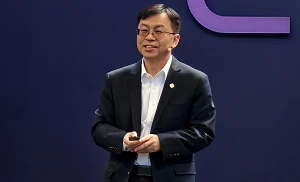
Sanjay Kasturia is the Vice President and Managing Director of Sales for India at Syniverse.
More Articles you may be Interested in...





Yas Tanzania and Ericsson partner for enhanced 4G


Payment platform for farmers launched in Malawi