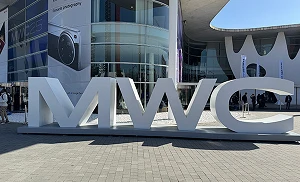
What will everyone be talking about at MWC2026?
Feb 25, 2026



A newly announced ‘small cell’system from Alcatel-Lucent claims to deliver improved broadband speeds, coverage and quality for subscribers in high-traffic locations such as railway stations and sports stadiums in the minimum time...
A newly announced ‘small cell’system from Alcatel-Lucent claims to deliver improved broadband speeds, coverage and quality for subscribers in high-traffic locations such as railway stations and sports stadiums in the minimum time. Known as lightRadio Metro Cell Express, the new system combines Alcatel-Lucent's innovative lightRadio mini base station technology with a new range of services to enable mobile operators to address exploding demand for video streaming, Internet access and voice calls in high-traffic locations.
As more people use mobile devices to access high-bandwidth services such as video calling and Internet gaming, cellular networks are being stretched beyond capacity. In busy locations such as sports stadiums, concert halls and train stations, high numbers of people accessing a network at the same time can result in slower speeds, lower quality and dropped calls.
Many mobile broadband providers are turning to metro cells - small base stations - to increase capacity in particular areas to relieve pressure on the network and improve data speeds and quality. However, determining the best way to deploy metro cells and integrate them into their cellular network can be a challenge.
The new solution combines Alcatel-Lucent’s Metro Cell portfolio with a unique set of services and Bell Labs expertise to address the typical challenges mobile operators face when introducing small cells into their network.
Instead of placing metro cells in sites they own or rent, mobile service providers need to obtain permission to deploy them in public spaces, on things such as lamp posts or street signs. Additionally they must provide power and backhaul connections (links to the Internet and phone network) to the sites. Equally importantly, they need to commission, install and integrate them within the cellular network so that there is no interference as subscribers move around.
Caroline Gabriel of Rethink Research said: “Many operators are now starting to plan in earnest for large scale metro cell deployments. They recognize that these networks need to do more than just boost capacity overall – to deliver business objectives, that capacity needs to be carefully targeted and flexibly managed. The complexities are far greater than in the macro cell market, with many issues to consider, such as site acquisition, interference, regulations, backhaul and cost. All these need to be addressed holistically to determine the best architecture for a particular operator’s business case. With its experience in every aspect of the wireless and fixed network, Alcatel-Lucent’s lightRadio Metro Cell Express solution pools all its expertise into a holistic solution that looks far beyond the complexity of the radio, to focus on real world operational challenges that operators will soon be facing in the field.”
Mike Schabel Vice President of Alcatel-Lucent’s Wireless lightRadio Metro said: “Alcatel-Lucent’s lightRadio Metro Cell Express solution uses our wealth of expertise to bring the cell closer to the subscriber, connecting them anytime, anywhere with greater quality. This allows mobile operators to begin to realize the potential of Heterogeneous Networks (HetNet) and add capacity in line with the explosion in their subscribers’ demands today and in the future.”
The lightRadio Metro Cell Express solution combines the Alcatel-Lucent 9764 Metro Cell Outdoor (MCO) and 9768 Metro Radio Outdoor (MRO), with lightRadio Wi-Fi as an option to give subscribers automatic secure Wi-Fi connections, with Bell Labs and services. These include:
Alcatel-Lucent’s lightRadio Metro Cell Express solution was developed based on Alcatel-Lucent’s extensive experience in small cell deployments. The company claims its approach offers big gains for mobile operators including a seven-fold improvement in metro network utilization, ensuring that cells are placed in areas where they are most used by subscribers compared to a standard deployment.
IT also claims lightRadio offers improvements in cell accessibility by ensuring cells are closer to the customers and there are no barriers to radio signal. In addition, call drop rates are reduced by 83%.
To date, Alcatel-Lucent has 39 commercial small cell deployment agreements and over 20 ongoing trials.




Company registered in England, number 5724661
All content copyright © 2005-2026 Developing Telecoms Ltd. All rights reserved.