Construction begins on Asia’s Candle cable system
Sep 18, 2026



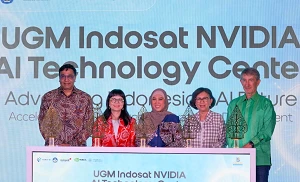
Telkom Indonesia announced on Friday it is collaborating with Gadjah Mada University (UGM) to develop an earthquake detection system combining Telkom's subsea cable infrastructure with distributed acoustic sensing (DAS) technology.
According to UGM, DAS technology essentially turns optical cables into sensors that can detect seismic waves – in particular, the primary waves that appear earlier than the destructive secondary waves. This enables earthquakes to be detected in real time. Combined with geospatial systems, this can providing early warnings from a few seconds to minutes before the main shock occurs, giving communities in disaster-prone coastal areas crucial time to carry out evacuation and early rescue measures.
Telkom said the technology also enables it to better monitor its sea cables for disruptions caused by both natural activities such as earthquakes and human activities such as shipping and fishing.
With sea cable disruptions occurring as often as 15-17 times a year, the DAS tech will enable Telkom to increase operational efficiency and provide preventive protection for its subsea infrastructure, said Telkom president director Ririek Adriansyah.
"This collaboration is a very important synergistic step because it provides direct benefits for the community through the disaster early warning system, as well as having strategic potential to support the security of Telkom's underwater optical cable assets," he said in a statement.
Telkom said it will initially test the DAS technology on inter-island subsea cables in locations with frequent seismic activity on Indonesia’s west and southern coasts before extending it to other areas.
Telkom and UGM have also compiled a collaborative protocol so that data from the project can be used openly for research and public policy to strengthen Indonesia’s national system to better deal with disasters in a more integrated and responsive manner.
The Telkom-UGM project is the latest effort to transform subsea telecoms cables into sensors for detecting earthquakes and climate shifts.
Subsea cable firm ASN signed a deal with Vanuatu-based telecoms infrastructure firm Prima in January 2024 to design, manufacture, and deploy the “Tamtam” subsea cable that will run from Vanuatu and New Caledonia that will also be fitted with “climate change nodes” to enable real-time monitoring of seismic activities and efficient tsunami detection.
In September 2024, ASN said it would collaborate with seismic instrumentation company Nanometrics and environmental monitoring firm RBR to integrate climate-change monitoring tech into the Tamtam cable and other subsea cables.



Company registered in England, number 5724661
All content copyright © 2005-2026 Developing Telecoms Ltd. All rights reserved.