


Anti-liberalisers speak out in Uganda - and are silenced
- Details
- Category: Trends & Forecasts
- 10669 views

Uganda's government is looking towards a more competitive telecoms environment. And yet the country's two telecoms providers seek to differ. Michael Schwartz looks at the background to this clash of opinion.
All too sadly, any analysis of Uganda is still overshadowed by the country's agonising and heart-breaking history. She is still held up as an example of third-world failure, associated with one blood-thirsty tyrant.
Of course, many things have changed for the better - for example, the Ugandan mobile market covers nearly the whole country, and there are interested players.
For the time being, however, Ugandan telecoms constitutes a duopoly. Uganda Telecom Limited is one player. MTN of South Africa (reflecting the immense changes to the political make-up of Africa as this would have been unthinkable twenty years ago) is the second player.
Neither is convinced that freeing up the market in Uganda will help the country. So much so that they have just taken their case to Uganda's Parliamentary Committee for Information Communication and Technology. For them, underlying economic conditions are the problem - opening the market up to competition will neither benefit the Ugandan economy nor increase tele-density.
Uganda Telecom proposed to the committee that the country's regulator must concentrate on defining standards to be met - with a facility to penalise non- or under-achievement. In addition, libera lisa tion of telecoms in Uganda could bring in players interested solely in profit but without commitment to long-term economic growth.
What has actually emerged from Uganda Telecom's argument is a lack of sympathy from both the parliamentary committee and sections of the local press. Members of the parliamentary committee rejected the proposal: both companies have dominated telecoms in Uganda for a long time, and cheaper and better services would not emerge if they continued to enjoy their duopoly.
Uganda's influential Daily Monitor newspaper also questioned the UTL/MTN proposal. They asked what would happen if existing standards - high as they may be - could be applied to more than just two companies. If say five companies operated, but with each contributing to infrastructure as a pre-condition, then Uganda will enjoy a successful and environmentally viable network, not to mention one where the whole point of liberalised services would be evident - more services and cheaper services. Most people will gain.
End of Duopoly
Uganda will be opening up the sector to more than two players. Quite simply, the UTL/MTN duopoly is finished.
It is not surprising that the two players protested about the changes to their market position. The dynamic duo would be subject to fewer subscribers (and less income) not to mention the challenges of competition, real or imagined, and that would send a chill down their corporate spines.
One argument mentioned in the Daily Monitor is that the two companies need to recoup their investment costs. This does not wash; if the two can not make up their expenditure when a duopoly, what will they be like in an open environment?In the opinion of Developing Telecoms, a grouping of several players participating in the Ugandan telecoms market can only be good. The companies will invest in infrastructure, bring low-cost communication to ordinary citizens, and pave the way for services such as e-commerce and mobile commerce. Not to mention helping Uganda climb the long hard slope towards a positive image worldwide.
In fact, the duopoly's question has already been answered. Their period of control may soon come to an end. The same parliamentary committee to which UTL and MTN appealed has just been informed by Patrick Masambu, Executive Director of the Uganda Communications Commission, that the government ofMore Articles you may be Interested in...





Payment platform for farmers launched in Malawi


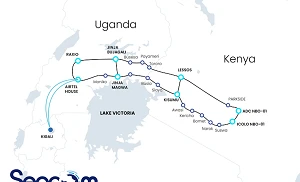
Seacom launches new terrestrial route in East Africa




NTT Data expands Salesforce offering in Kenya


Nigeria misses target for domain name adoption