IQSTEL plans to acquire 51% of Ghana’s Ultranet
Jun 04, 2026



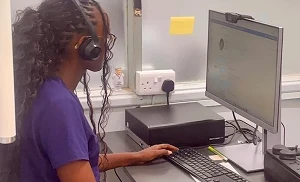
Telecentre organisers in Congo Brazzaville recently met to discuss the approach they needed to take if their telecentres were to fulfil their targets of bringing ICT to the Congolese people. Sylvie Niombo of APCNews explains...
Telecentre organisers in Congo Brazzaville recently met to discuss the approach they needed to take if their telecentres were to fulfil their targets of bringing ICT to the Congolese people. Sylvie Niombo of APCNews explains.
A telecentre is defined as a physical site where members of the community have access to information and communications technologies (ICT) equipment.
The first telecentres in Congo with Internet access date back to 1999-2000. They also offered a range of other services such as computerisation of documents, printing, photocopying, document scanning, CD burning, telephone calls and training in various areas. This was the case for telecentres managed by public authorities such as the Congolese Informatics Office (Office congolais de l'informatique) and associations such as the Young Enterprise Forum (Forum des Jeunes Entreprises), which distinguishes them from cybercafés, whose main objective is commercial.
The role of telecentres in local development
Brought together at a three-day workshop in Brazzaville with the financial support of telecentre.org, telecentre leaders identified the priority focal points of their action in bringing the advantages of ICT to the Congolese people.
They emphasised an appropriate methodological approach so that telecentres would be capable of meeting the needs of their target group in terms of information and training. Examples of telecentres which disseminate information on HIV/AIDS, agriculture and livestock production were cited, among others, such as those offering services to entrepreneurs.
Moreover, the need to evaluate the impact of the telecentres on the people, especially marginalised groups, was highlighted by the participants. At the request of the network of Congolese telecentres, there was a presentation of the Gender Evaluation Methodology (GEM) tool, developed by the Association for Progressive Communications Women's Networking Support Programme (APC WNSP), and which will be adapted for the telecentres.
Development of Congo telecentres is self-financing
As opposed to other countries, telecentres in Congo were started with their own funding: very few have received donor support. This explains in part why these telecentres, which have had to survive using their own means, have not managed to overcome the difficulties that confront them. The most striking constraints which they face are the high cost of computer equipment; the lack of qualified human resources; the absence of an effective ICT promotion policy; instability of electricity supplies and the high cost of connection to the Internet.
In order to mitigate such difficulties, a Congo Community Telecentres Network (Réseau des Télécentres Communautaires du Congo) was created in 2006. The members of the network have rejected sporadic development, convinced that there is strength through unity.
Favouring global solutions over individual telecentre initiatives
It is true that electricity is a real headache for telecentre managers who no longer know to which saint to pray. The sector's electricity from the National Electricity Company (SNE - Société Nationale d'Electricité) is subject to frequent drops in voltage and wirings are faulty. Fuel prices mean that generators are not a satisfactory alternative. Digital converters, equipment intended to convert electrical voltage, therefore constitute an alternative source of power that can provide electricity for five days. This is supplied by storage batteries that automatically recharge with electric current, generators or solar panels.
This solution has been extensively presented and the idea is to replicate it in all regions where there are telecentres. The project of interconnecting the telecentres in the Congo is, moreover, coming at the right time. All the telecentres will be connected to each other via a common access point, using WiMAX technology. Access to the internet will be through dedicated bandwidth via a parabolic antenna (VSAT). The signal will then be evenly distributed to all the telecentres.
An action plan which stresses capacity building
The Congo Community Telecentres Network has developed its action plan around building the capacities of the telecentre leaders and establishing a technical assistance office. The network is henceforth working at mobilising the necessary resources for the implementation of this action plan. An appeal is being launched to development partners to support this initiative.








Company registered in England, number 5724661
All content copyright © 2005-2026 Developing Telecoms Ltd. All rights reserved.