InfiniVAN, IPS to help BCDA develop Luzon Bypass Infrastructure
- Details
- Category: Optical & Fixed Networks
- 9281 views

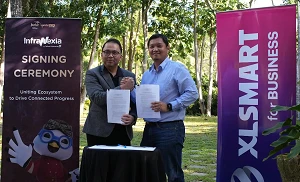
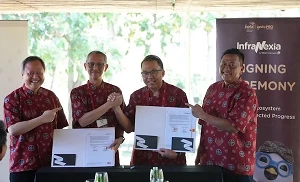
Philippine fibre network operator InfiniVAN and its parent company, Japanese telecoms services provider IPS, have signed a MoU with the Bases Conversion and Development Authority (BCDA) to beef up BCDA’s fibre infrastructure assets, particularly the Luzon Bypass Infrastructure (LBI).
The LBI comprises two strategically situated subsea cable landing stations in San Fernando, La Union and Baler, Aurora, as well as a 240-km fibre optic conduit network connecting the two landing stations.
The LBI is being developed by BCDA, the Department of Information and Communications Technology (DICT) and Meta as part of a 2018 agreement to provide the Philippine government with 2 Tbps of international bandwidth between the Philippines and the US in order to mitigate pervasive submarine cable risks along the Luzon Strait.
Under the MoU signed on Tuesday, InfiniVAN will leverage its nationwide digital infrastructure (including subsea and terrestrial fibre, as well as wireless) to support the project, while IPS will contribute its purchased capacity on the EAC-C2C network from Hong Kong to the Philippines and Singapore to the Philippines.
The BCDA is a government-owned property development agency tasked with converting former military bases in the Philippines into commercial development centres.
InfiniVAN president Shigeki Nakahara said the project will not only accelerate the rollout of the government’s National Broadband Plan, but also expand digital inclusion by opening opportunities for economic growth in business centres and economic zones.
“This partnership is more than just building networks – it’s about creating lasting socio-economic impact for Filipinos by ensuring faster, safer, and more reliable connectivity,” he said in a statement.
The deal with InfiniVAN and IPS is one of three MoUs the BCDA signed with Japanese firms at the Philippines embassy in Tokyo this week. The second was with industrial and engineering firm Kanadevia Corp (KVC) to explore the feasibility of developing a waste-to-energy (WTE) facility in the BCDA;s New Clark City, and the third was a partnership deal with Japan Bank for International Cooperation (JBIC) to develop and promote BCDA projects that support environmental and social sustainability.