Viasat and BMW demonstrate integrated satellite voice calls for connected vehicles
- Details
- Category: Satellite Networks
- 5193 views

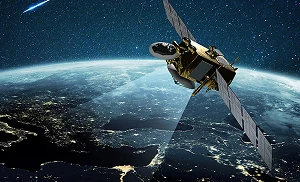
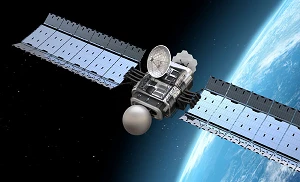
Viasat has demonstrated what it claims is the first satellite voice call fully integrated into a BMW Group vehicle, highlighting how non-terrestrial networks (NTNs) could extend connected car services beyond the reach of terrestrial mobile coverage.
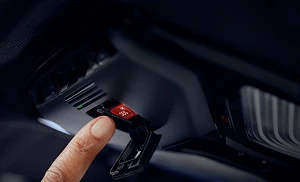
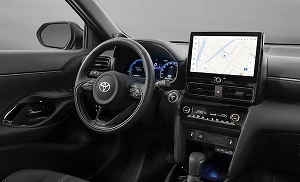
Showcased at this week’s 5G Automotive Association (5GAA) Meeting Week in Munich, the demonstration enabled a voice call to be initiated directly from a BMW iX3’s infotainment system using Viasat’s L-band satellite network and the NB-IoT protocol.
The proof of concept combined Qualcomm’s Snapdragon Auto 5G Modem-RF Gen 2 platform with an AI voice codec from Fraunhofer IIS, allowing compressed voice traffic to be transmitted over a geostationary satellite. The demonstration also builds on Viasat’s collaboration with software-defined vehicle connectivity provider Cubic3, whose eSIM technology enables vehicles to seamlessly switch between terrestrial and satellite connectivity.
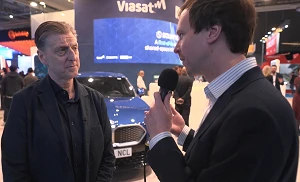
Damian Lewis, Market Development Director at Viasat, said demand for always-on connectivity is growing as vehicles become increasingly software defined and reliant on cloud-based services.
“Vehicles are designed to be connected, and terrestrial coverage takes that quite far, but there are gaps,” Lewis said. “Using satellites to bridge those gaps and cover areas that aren’t served by terrestrial mobile connectivity is a really effective way of doing it.”
Lewis said the system uses existing NTN infrastructure, meaning automotive OEMs could deploy the technology without waiting for new satellite networks. While the current demonstration focuses on emergency voice calls, he added that future developments could support higher-bandwidth services as 5G NTN standards evolve.
BMW said satellite connectivity is becoming increasingly important as more vehicle functions move to the cloud.
“The car needs to be connected,” said Olaf Eckart, senior expert for R&D Cooperation and Partner Management at BMW Group. “Our customers want ubiquitous connectivity, and we wanted to move away from proprietary systems to interoperable and scalable solutions.”
Eckart added that narrowband IoT provides an immediate path for emergency messaging and voice services, while future 5G New Radio NTN capabilities are expected to enable higher-data-rate applications in areas without terrestrial coverage.