

International capacity developments to benefit the telecoms sector in Samoa
- Details
- Category: BuddeComm Market Reports
- 9439 views

Samoa was one of the first Pacific Island countries to establish a regulatory infrastructure and liberalise its telecom market. In 2006, it became the first in the region to see the market entrance of Digicel, which has since launched services in other Pacific nations.
The advent of competition in the mobile market saw prices fall by around 50% and network coverage increase to more than 90% of the population.
4G LTE is developing on the back of its initial launch in 2016 by Digicel Samoa, followed by BlueSky Samoa (now Vodafone Samoa) in early 2017. Digicel Samoa is considered to be the mobile market leader with its network covering the entire coastal areas of the country, which is home to about 95% of the population.
Similar to other countries in the Pacific Islands, Samoa’s telecoms sector has been inhibited by a lack international connectivity. While Samoa has had access to the Samoa-America-Samoa (SAS) cable established in 2009; it is now recognised that this ageing cable will not meet the future bandwidth needs of Samoa.
This issue is being addressed with two new submarine cables becoming available during 2018 and 2019. These, combined with the Samoa National Broadband Highway (SNBH), will improve speed, reliability and reduce the high costs which have previously been associated with Internet Access for Samoa.
BuddeComm notes that the outbreak of the Coronavirus in 2020 is having a significant impact on production and supply chains globally. During the coming year the telecoms sector to various degrees is likely to experience a downturn in mobile device production, while it may also be difficult for network operators to manage workflows when maintaining and upgrading existing infrastructure. Overall progress towards 5G may be postponed or slowed down in some countries.
On the consumer side, spending on telecoms services and devices is under pressure from the financial effect of large-scale job losses and the consequent restriction on disposable incomes. However, the crucial nature of telecom services, both for general communication as well as a tool for home-working, will offset such pressures. In many markets the net effect should be a steady though reduced increased in subscriber growth.
The report also covers the responses of the telecom operators as well as government agencies and regulators as they react to the crisis to ensure that citizens can continue to make optimum use of telecom services. This can be reflected in subsidy schemes and the promotion of tele-health and tele-education, among other solutions.
Key developments:
- BlueSky Samoa re-brands as Vodafone Samoa;
- Digicel Samoa completes network upgrade to LTE;
- In early 2018 Cyclone Gita hit the South Pacific region causing widespread damage to Samoa and other islands nations. Essential communication services were quickly restored and repaired by the operators.
- In 2019/2020 an important telecoms development is occurring for Samoa with the launch of the Kacific-1 satellite.
- Report includes assessment of the global impact of COVID-19 on the telecoms sector.
Get a Full Copy of this Report
Developing Telecoms market report summaries are produced in partnership with BuddeCom, the world’s largest continually updated online telecommunications research service.
The above article is a summary of the following BuddeCom report:
Report title: Samoa - Telecoms, Mobile and Broadband - Statistics and Analyses
Edition: September 2020
Analyst: Sebastien De Rosbo
Number of pages: 62
Companies mentioned in the report: Amalgamated Telecom Holdings (ATH), Vodafone Samoa, Amper SA, Blue Sky Samoa, Digicel Samoa, Kacific Broadband Satellite, O3b.
Single User PDF Licence Price: US$750
For more information or to purchase a copy of the full report please use the following link: https://www.budde.com.au/Research/Samoa-Telecoms-Mobile-and-Broadband-Statistics-and-Analyses/?r=83
More Articles you may be Interested in...

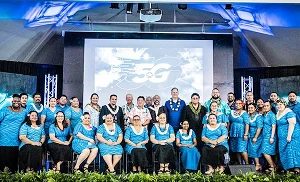
Bluesky and Ericsson switch on 5G in American Samoa

Guinea sees sharp rise in mobile broadband traffic
Mali’s dominant mobile network operators trial 5G