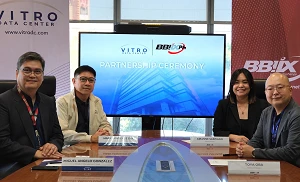
PLDT’s Vitro establishes direct IX peering with BBIX
May 29, 2026




The main challenge now in emerging markets is to deliver mobile internet affordably, both to urban elites and to presently unserved remote areas. To do this, operators will need to be innovative...
The main challenge now in emerging markets is to deliver mobile internet affordably, both to urban elites and to presently unserved remote areas. To do this, operators will need to be innovative.
One of the most innovative concepts I encountered during Mobile World Congress this year came from Smart Communications. Smart, a PLDT owned company, are the largest CSP in the Philippines with around 46 million subscribers and a 48% market share.
Orlando Vea, one of Smart’s founding partners has a personal mission to deliver mobile internet to customers at prices they find affordable. He compares this to his original vision when Smart was founded: to provide mobile voice to a market that would never – or so it was widely believed - be able to afford it.
Smart and Vea know a thing or two about operating in low cost base markets. With 98% prepaid customers Smart’s ARPU is amongst the lowest in the world. Despite this, the company makes a good profit and has done so over a number of years without the need for subsidy from its parent.
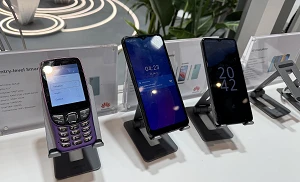
Smart launched the Netphone at MWC this year. Now they have a team of engineers working on a new concept to address the need for ultra low cost mobile data. The project aims to achieve less intensive use of the network by breaking data up into smaller packets or ‘minibytes’.
According to Smart engineers and researchers, this will enable two things: firstly, the amount of data transmitted across the network and downloaded by customers is reduced as redundant data is cut out of the download; secondly, by lightening the data load, it will be possible to operate the network at a ‘half-state’.
The concept of ‘half-state’ networks is not entirely new, but most people in the industry associate it with the powering down of infrastructure during periods of low demand - at night, for example. This has the effect of reducing the number of base stations in use at any one time with consequent reductions in operating costs, principally that of fuel. A number of vendors – among them Ericsson and Altobridge - offer systems designed to achieve this result.
Smart appear to be taking the ‘half-state’ concept in a different direction; whether it will be successful remains to be seen. What is clear, however, is that to deliver on the promise will require more than network development.
In order to achieve the reductions in data transmission levels, devices themselves will need to be optimised to take advantage of the network, as will the network management and OSS/BSS software. Smart are already developing this, principally through the work they are doing in launching the Netphone and developing the data services to support this product. The Netphone is pitched at a market where the budget for data is only US$0.50 per day, an unthinkably low level in advanced markets, and Smart is confident that this will be profitable for it.
There is still more work to do before the ‘half-state’ network is at the ‘market-ready’ stage. Smart’s engineers hope to commence trials later this year, but it is clear that developments such as this point that way forward to ultra-low cost mobile data services in emerging markets.






Company registered in England, number 5724661
All content copyright © 2005-2026 Developing Telecoms Ltd. All rights reserved.