

Oracle: Gordon Rawling's 2014 Trends
- Details
- Category: 2014 Trends
- 11296 views

While we’re no doubt well into the global data boom, the number of sources generating this fast-growing volume of data continues to multiply exponentially.
From utilities smart meters, to “second screen” viewing devices and intelligent connected cars, we find ourselves hard-pressed to pick out a single part of our daily routine that doesn’t involve the creation of new data.
In response, CSPs have begun the transition from voice and data to full data networks to ensure the reliability and cost-effectiveness of their services and support customers’ new digital lifestyles. With 4G LTE networks set to become the norm in developed markets in 2014, operators will continue to invest in Diameter signalling capabilities to effectively manage the increase in Diameter traffic as well as making the transition to Voice over LTE.
EMEA is now the fastest growing market for LTE Diameter signalling traffic, increasing by over 200 per cent in the past year alone, according to the Oracle Communications LTE Diameter Signaling Index. With the pace of Diameter growth set to overtake that of data traffic, cost-conscious CSPs will prioritise investment in this space to shore up the foundations of their networks and support subscribers evolving usage habits.
Evolution of Network Functions Virtualization and Software Defined Networks
The evolution of NFV and SDN will be a gradual process, the first step of which is already underway. With more CSPs building virtualised Diameter networks, providers will be able to take advantage of newfound network insight and subscriber engagement to develop timely, relevant offers tailored to their needs. The long-term vision is for CSPs to deploy software-defined “thinking” networksthat respond automatically to shifting conditions using near real-time insight on subscriber behaviour and network performance.
While NFV is based on the same virtualisation technology that has been in place on the IT side for some time, SDN is an emerging technology and still in the process of being defined. Providers envision a whole spectrum of different possibilities with the technology and are racing to develop the applications that will make it pay off for them first. Although universal interoperability standards have yet to be agreed upon, the potential cost savings and enhanced flexibility of SDN are too compelling for CSPs to ignore.
Convergent Charging
To secure future revenues while supporting their customers’ new digital lifestyles, many service providers have begun to modernise their network infrastructure with technologies such as M2M and cloud. While these investments will no-doubt help them better serve subscribers, today’s empowered customers want more than technically sound service; they expect the freedom to manage and personalise their charging and policy rules on one simple interface, using any of their many connected devices.
CSPs that want to meet these expectations will benefit from convergent charging solutions that provide consumers with flexible, intuitive billing platforms, and that give operators the means to manage increasingly involved user contracts.
Investment in convergent charging technology will continue to grow across Europe, with some vendors set to merge with each other as competition in the market for flexible subscriber policies heats up. With consumers immersing themselves in new digital lifestyles and adding a record number of connected devices to already-loaded networks, CSPs that introduce convergent charging plays can simplify their billing practices to better manage these technologies and provide customers with a reliable and flexible service that will suit their constantly-changing needs.
The Hyper-Connected Enterprise
New communications technologies are enabling the “hyper-connected enterprise” – a new era of rich employee collaboration and efficient customer service. Mobile devices, cloud communications services and new unified communications suites are disrupting legacy enterprise communications models and putting a range of voice, video, email and instant messaging tools into the hands of users. They can engage anytime and anywhere within the organization and with external stakeholders including customers, suppliers and other third parties.
Enterprises will deploy a new generation of communications architecture to enable the hyper-connected enterprise while protecting investments in legacy telephony systems. This open architecture will not only provide a platform to integrate communications and business applications, automate processes and speed up decision times, but also future proofs networks by integrating new technologies such as WebRTC.
The Hyper-connected enterprise will operate a communications network with three fundamental attributes:
- It connects people regardless of the devices, applications and systems they want to use;
- It secures interactions and makes them always available;
- It controls information flows to provide seamless user experiences independent of device, media or network type.
Gordon Rawling is the Director of EMEA Marketing at Oracle.
More Articles you may be Interested in...




How AI and satcoms can make cities cooler


Anant Raj to expand data centre business in India



DDSP secures green financing for data centre campus

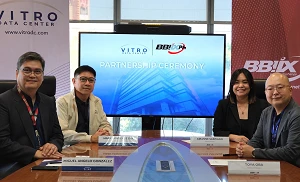
PLDT’s Vitro establishes direct IX peering with BBIX

New alliance aims to expand IoT coverage




Vodafone and Airbus boost Tirana’s airport security

EAC to discuss ways to advance regional roaming





Beyon signs Kuwait fixed network deal