
Mobile money hits $2tn milestone as growth outpaces usage
- Details
- Category: Mobile Finance
- 8657 views

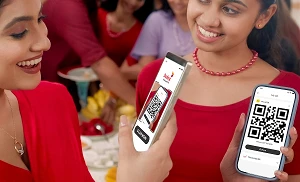
Mobile money transactions have surged to US$2 trillion globally, doubling in value over the past four years, according to the GSMA.
In a statement, the industry body noted that while it took 20 years for mobile money to reach US$1 trillion in annual transaction value, the figure has doubled in just four years. The number of registered accounts climbed to 2.3 billion, with 268 million new users added over the past year. Most of this growth came from Sub-Saharan Africa, although adoption is increasing across nearly every region.
Despite this expansion, monthly activity remains stagnant at 25.7%, leaving roughly three-quarters of accounts dormant. The GSMA attributed this to persistent fraud concerns and transaction taxes, which are driving some users back to cash.
GSMA Director General Vivek Badrinath said the sector must now balance rapid growth with greater responsibility. “Looking ahead, the industry’s growing scale and sophistication will bring new opportunities, and new responsibilities. By prioritising interoperability and cross-border harmonisation, engaging in digital public infrastructure, strengthening consumer protection and fraud controls, and accelerating women’s inclusion and financial health outcomes, we can ensure mobile money continues to provide safe, inclusive and sustainable digital financial services,” he said.
Regulation will play a central role in unlocking further growth. According to the GSMA’s State of the Industry Report on Mobile Money 2026, 60% of providers said interoperability and consumer protection frameworks have supported their platforms. However, the industry is calling for clearer cross-border data transfer rules, with 24% of providers reporting that current regulations are hindering operations.
Mobile money services first emerged in 2001 in the Philippines but gained real traction in the mid-2000s as African operators embraced the model. The launch of M-Pesa by Safaricom and Vodafone in 2007 proved a turning point, soon followed by Orange Money from Orange. In many emerging markets, mobile money has since become a core financial service, filling gaps left by traditional banking systems that struggled to scale quickly enough.

More Articles you may be Interested in...

Will Kenya tax mobile money transactions?

Airtel Money IPO delayed due to market volatility
Airtel Africa profit jumps as revenues near $6.5bn
What's next for fintechs in Africa?


Togo, Benin and Senegal launch free roaming

Honor and Valeo announce new facilities in Egypt


Sierra Leone announces Sierratel relaunch

India’s Jio to bring banking to feature phones


A direct line from LEO: problem or opportunity?