How AI and satcoms can make cities cooler
Jun 03, 2026



News that China’s 34th satellite launch of the year went smoothly will come as little surprise. However, some mobile communications users on the ground may be pleased.
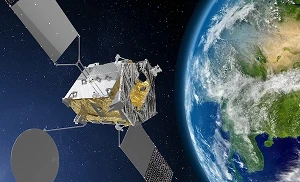
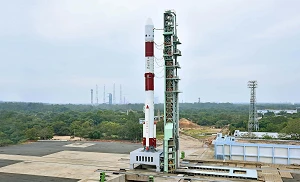
The Tiantong-1 (02) mobile communications satellite went into orbit above the Earth last week, carried there into a geostationary transfer orbit on a Long March 3B rocket.
Tiantong-1 (02) is part of a mobile network, together with ground facilities and user terminals, whose purpose is to provide mobile communication services including voice, short text messages and data. The satellite will serve users in China and the surrounding region, including parts of the Asia-Pacific, Middle East and Africa. Tiantong-1 (01), the first satellite for this mobile communication system, launched in August 2016. The follow-up Tiantong-1 (03) communications satellite is due to launch sometime in the next two months.
Which end users are to be served by these satellites is not absolutely clear, but Tiantong-1 01 has been described in some reports as a version of maritime satellite and as marking China’s entry into the era of satellite mobile communication phones.
Both satellites were developed by the China Academy of Space Technology (CAST), an arm of China’s main space contractor China Aerospace Science and Technology Corporation. CAST develops and manufactures satellites and spacecraft, including space station modules and Shenzhou spacecraft for human spaceflight missions.




Company registered in England, number 5724661
All content copyright © 2005-2026 Developing Telecoms Ltd. All rights reserved.