Eyes for a storm – ensuring connectivity throughout Hurricane Melissa
- Details
- Category: Humanitarian Comms
- 192273 views

Last week, Hurricane Melissa devastated Jamaica and swept through other islands in the Caribbean including Cuba, leaving a trail of destruction in its wake. Melissa was a Category 5 storm, the most intense to make Atlantic landfall for 90 years according to Agence France Press.
Sadly, such catastrophic extreme weather events are becoming increasingly common as man-made climate change causes global heating, with emerging markets disproportionately affected. Developing Telecoms has covered the critical role that telecommunications play in disaster management and relief since its inception, and unfortunately the extremity of such weather events has increased during this time.
Given the importance of ensuring continuity of communication throughout such disasters, operators in emerging markets must know how best to prepare for these events, how to ensure their services remain available as far as possible, and how to deal with the aftermath. As service providers, they play a vital role in helping communities prepare for the impact of disasters, as well as facilitating responses by NGOs.
To understand the picture more fully, we spoke to Marcelo Cataldo, CEO of Digicel Group, and Clément Bruguera, Head of Technology & Emergencies at Télécoms Sans Frontières, to learn more about how operator groups and relief organisations are mobilising in the wake of Hurricane Melissa.
Coordinated Resilience
Bruguera noted that as an NGO, TSF helps to prepare communities and disaster response mechanisms by coordinating in advance with organisations at national or regional level to build consistency in the humanitarian response, as well as sharing and coordinating emergency communications on the humanitarian side.
“When disaster strikes, the first step is to evaluate the needs of the most affected people, the access etc. This is where coordination with national operators occurs and is essential to provide timely and relevant support to affected communities. Recovery also depends on the ability of national operators to restore their service.”
Measures that operators should consider include installing equipment in reinforced buildings situated high above sea level, increasing backhaul links, decentralising their infrastructure by geographically multiplying redundancy points, and backing up the main network with generators, batteries, solar panels to prepare for power/electricity outages.
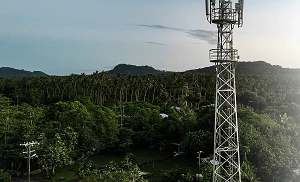
Bruguera concedes that preparations are more complex for base transceiver stations and towers, as building indestructible infrastructure simply isn’t financially possible for many operators. Instead, it’s more feasible for them to minimise the wind resistance of their outdoor facilities and antennas, then site them strategically. He adds that operators often have agreements with satellite providers to route some of their traffic via satellite – usually this is for remote or isolated sites, but this capacity can also be used during an emergency to restore sites when backhauls are damaged.
A final key factor is that operators often have teams that are trained and ready to intervene during emergency situations. The working methodology, which is normally very complex when installing or modifying new sites, has been adapted to enable immediate intervention and facilitate operations in the field.
Digicel’s chief executive, Cataldo, emphasises this point: “Independently of the technology, it’s all about preparation - and preparation starts with the team.” The Caribbean region experiences natural disasters every year, and Digicel begins annual business continuity training ahead of hurricane season in around March across both its group operations and at individual country level.

Marcelo Cataldo, CEO of Digicel Group
The group tracks storms and responds according to the situation. Cataldo notes that a month before Melissa, a Category 1 storm hit Bermuda – but strong preparation mitigated its impact, leaving the infrastructure unaffected. For Melissa, a Category 5 storm, coordination between the group team and Jamaica team was essential as the island is a key hub for Digicel’s operations. Cataldo underlined that staff safety is always Digicel’s top priority, and noted that since the Caribbean also experiences significant earthquakes, Digicel’s Jamaican headquarters and data centre servers are designed to withstand Category 9 quakes so that they can keep running throughout such disasters given their role in supporting operations in other markets.
On the mobile infrastructure side, Cataldo explained that Digicel’s antennas are designed to withstand Category 5 hurricanes but acknowledged that after such storms, issues such as refuelling and reorienting the antennas must be addressed. In the Caribbean, fibre is a major liability in storm season as it is predominantly installed on electricity poles owned by state energy firm JPS (Jamaica Public Service) rather than underground, making the cables more vulnerable to storm damage. While JPS is installing poles which are Category 5 resistant, it is too late for much of western Jamaica where Hurricane Melissa made landfall. Mobile sites are fully prepared to transmit, but can’t connect due to the fibre being knocked out – Cataldo notes that recovering fibre connectivity is Digicel’s main focus in the aftermath of a storm.
Blackout plan
Bruguera notes that operators can significantly reduce the risk of blackouts by adopting deployment practices that take into account climatic hazards, as Digicel has. “If decentralised, operators' core networks are likely to remain operational during or immediately after a disaster”, he says. “These network cores, connected to several international fibres, are essential for providing telecom services to customers. They are normally equipped with generators and large fuel reserves to enable operations to continue for several days after an event.”
The situation is more complex for cell sites and towers since there are so many more sites – and those in the most affected areas will likely sustain damage. Even if the cell tower has survived, a power source is available, and at least part of the backhaul is operational, the service will be degraded (i.e. voice and SMS only). Data centres are typically restored with significantly lower speeds that then improve gradually until full service is restored.
“The first thing is to be able to assess the network and understand what is going on”, says Cataldo. “From the GNOC [General Network Operations Centre], you can see that you have some areas disconnected, but you don't know if the fibre is fully down, how many cuts the fibre has, until you get there. You need to get in the streets to be able to understand what is going on.”
He notes that one of Digicel’s key learnings from Hurricane Beryl in 2024 was the amount of time it takes to recover after a major storm. Digicel rotated groups of technicians and riggers across the weeks following Beryl; it took around two months before service was back to pre-storm levels. Following Melissa, 77% of Jamaica’s national grid was down, so restoring electricity is a huge job. Digicel learnt this lesson with Beryl, improving its ability to refuel quickly by distributing fuel across different areas of the country, and putting sustainable agreements in place with fuel companies to enable quicker service restoration. Disciplined coordination and planning between companies and government agencies can accelerate the restoration significantly, says Cataldo.Bruguera notes that the extent of service disruption following a disaster depends on various factors including the topology of the affected area, the logistics constraints, and the operators’ ability to restore the service. Cataldo notes that this can be affected by relief agencies – if they are able to mobilise and clear roads to facilitate supply delivery, connectivity can be restored more quickly – and Bruguera adds that TSF enables this by providing essential communications for relief organisations to assess the situation and requirements, as well as manage aid operations.
The service provided by mobile operators is sometimes quickly restored, albeit partially, in certain areas. Extensively damaged sites are assessed as a priority, and operators will also prioritise sites essential for coordination efforts such as government headquarters, or the most affected areas where emergency services are mobilized on a massive scale for clearing and searching for victims in densely populated areas. Emergency organisations such as TSF share capacity and cooperate with national operators to temporarily cover these sites.
Predicting Disaster
In the aftermath of a disaster on the scale of Hurricane Melissa, it can feel overwhelming to contemplate the next such incident – but with the climate crisis exacerbating the region’s storm season, more Category 5 storms may be inevitable, and operators and relief organisations alike must prepare for this eventuality.
For Cataldo, the top priority is making infrastructure more resilient: “As we rebuild, we rebuild stronger infrastructure.” He notes that Digicel’s mobile antennas can withstand Category 5, and this will soon apply to JPS’ fibre poles. “Every time that this happens, we build more and more resilient infrastructure to be able to cope with these situations. For us it’s not only about the physical restoration of the network; we also work with community partners; schools, social organisations, we offer free service to our customers to ensure that they have connectivity.”
Cataldo underlines the importance of cooperation with local institutions and national agencies to restore connectivity as well as support communities as they recover – a sentiment mirrored by Bruguera, who highlights how TSF cooperates with humanitarian and intergovernmental bodies at a regional level to strengthen community preparedness in emergency communications.
“Strategic alliances at national, regional and international level are key to provide relevant support to people affected by disasters and improve the overall humanitarian response”, says Bruguera. “It shows that preparedness is one of the keys to face these environmental disasters, and that people and organisations can access communications quicker and more efficiently when we work together.”
More Articles you may be Interested in...

Emerging archetypes in MVNO evolution in Africa

Flow Jamaica expands 5G to prepaid customers


Strategies for sovereignty in the Age of AI