HBL and RAD to support comms for Indian Railways
Oct 05, 2026


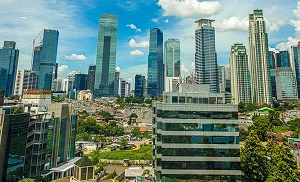
With declines in ARPU worse than previously forecast, Indonesia is one of the riskier markets in Asia-Pacific – but it holds significant promise...
With declines in ARPU worse than previously forecast, Indonesia is one of the riskier markets in Asia-Pacific – but it holds significant promise, according to new information from Business Monitor International.
Dropping user revenues were reported by major firms such as Telkomsel, Indosat and XL Axiata; this may have been caused by intense competition arising from price promotions to grab market share and rural expansions.
Indosat has reportedly launched a sale of 4,000 telecoms towers to raise more than US$500mn. The firm has been mulling the sale of its tower assets for more than a year, which would allow it to boost cash reserves and concentrate on its core business of providing mobile services.
These additional funds would help the operator to consolidate its position as the second largest mobile operator in Indonesia. The government’s encouragement of tower-sharing as a means of reducing resource duplication and lowering capital expenditure may have motivated Indosat’s decision to sell its towers.
Indonesia's Ministry of Communications and Information and Technology issued a regulation in March 2008 that gave local governments the ability to limit the number and placement of telecoms towers. Furthermore, telecoms operators that own towers are obliged to allow alternative operators to use their towers without discrimination. Consequently, there is less incentive for mobile operators to incur hefty costs to increase the number of base stations.
Meanwhile, the planned merger of Telkom's Flexi brand and Bakrie Telecom's Esia has collapsed after one year of negotiation. Although the deal was potentially a good fit and both companies would have formed an entity that would have controlled more than 90% of Indonesia's CDMA market, there were also many challenges that hindered positive progress.
Nevertheless, the agreement was looking increasingly precarious after Bakrie Telecom's parent company, Bakrie & Bros, said in March 2011 that it was frustrated by the lack of progress and could talk to alternative suitors. Besides concerns from Indonesia's business competition supervisory commission, Komisi Pengawas Persaingan Usaha (KPPU), about a possible monopoly and Telkom's labour union, Telkom said its shareholders did not approve of BTel's request to acquire a majority stake.
Indonesia is off to a flying start, registering real GDP growth of 6.5% y-o-y in Q111, driven by private consumption and investment. However, although Indonesia has returned to relative orderliness since the post-Suharto chaos of the late 1990s and early 2000s, the country faces multiple challenges and threats to its stability that could flare up again if President Yudhoyono or his successor proves incompetent or if improved governance fails to take hold. Investors will continue to view Indonesia as one of Asia's riskier destinations.








Company registered in England, number 5724661
All content copyright © 2005-2026 Developing Telecoms Ltd. All rights reserved.