Malaysia ministry backtracks on use of Huawei GPUs in sovereign AI stack
- Details
- Category: Data Centres & Networks
- 6387 views
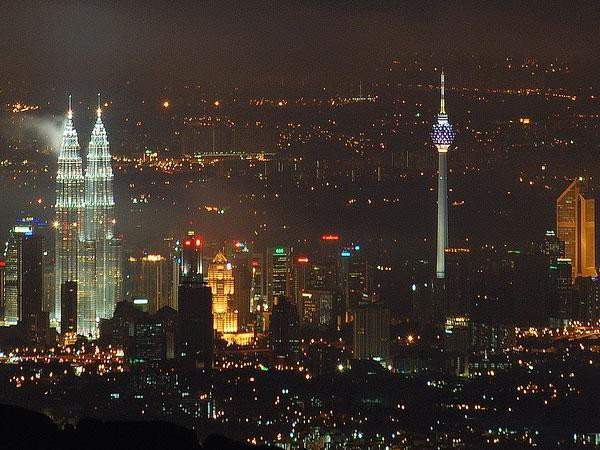
Malaysia’s deputy communications minister has reportedly retracted her remarks earlier this week that a new sovereign, full-stack AI ecosystem launched in the country includes GPUs supplied by Huawei.
Deputy Minister of Communications Teo Nie Ching launched the "Strategic Artificial Intelligence Infrastructure" on Monday, saying in a speech that the initial AI infrastructure would feature a generative AI cloud environment run by Malaysian firm Skyvast Cloud. Teo also said the initial AI cloud was powered by eight Huawei Ascend GPUs.
Teo also said the Skycast cloud hosts China’s open-source LLM DeepSeek, which she said makes it the first national-scale sovereign LLM deployed in Malaysia, and the first such for DeepSeek outside of China.
But according to a report from Bloomberg on Tuesday, Teo’s office said it had retracted her remarks regarding Huawei’s involvement in the AI ecosystem project. No reason for the retraction was given.
Bloomberg noted that the retraction came shortly after David Sacks – US president Donald Trump’s AI and crypto czar – responded to the news on social media site X, saying the Malaysia launch was proof that “the full Chinese [AI] stack is here”, and that the Trump administration was justified in last week’s decision to rescind the Biden AI Diffusion Rule limiting US exports of AI chipsets.
His remarks came a week after the US Commerce Department issued guidance declaring that usage of Huawei's Ascend AI chips "anywhere in the world" violates US export controls. The Commerce Department later changed the wording, saying the guidance “alerts industry to the risks of using PRC advanced-computing ICs, including specific Huawei Ascend chips”.
Meanwhile, a Huawei representative told Bloomberg that the company hasn’t sold Ascend chips in Malaysia and that the government hasn’t bought any.
However, Huawei Malaysia did announce last month that it had signed an MoU with Skyvast (a private company with no goverrnment ownership) to jointly promote Malaysia’s “sovereign AI cloud infrastructure” using Ascend GPUs, as well as Huawei’s Kunpeng servers, cloud platforms and networking solutions.
In any case, the Malaysian government’s reported retraction highlights the sensitivity of the ongoing chipset battle between the US and China amid the broader trade dispute between the two countries, with countries like Malaysia caught in the middle.
Apart from the trade war itself, the Trump administration also seeks to prevent China from influencing or dominating the global AI sector. The Trump administration has claimed the AI Diffusion Rule – which was set to take effect on May 15 – would limit the ability of the US to dominate AI development instead of China.
Last week, the US Commerce Department announced the “US-UAE AI Acceleration Partnership”, under which UAE-based tech group G42 will build a 5GW AI data centre campus in Abu Dhabi to provide a regional platform for US hyperscalers. Commerce Secretary Howard Lutnick described the deal as “a major milestone in achieving President Trump’s vision for US AI dominance.”

More Articles you may be Interested in...









Submer and Intel collaborate on AI in MEA




Vodafone Egypt upgrades Ericsson RANs with AI chips
Construction begins on Asia’s Candle cable system

US agency to invest $155 million in WIOCC